

Our comprehensive blood panel is run through Access Medical Labs and built specifically for mental health. It’s a standard blood draw — the same phlebotomy you’ve done before — but the difference is in what we order and how we read it. Instead of the handful of markers a routine visit covers, this panel spans metabolic, thyroid, inflammatory, adrenal, and mineral systems, and we interpret every value against functional ranges rather than only against the wide “disease-or-not” reference bands.
Results typically return within about a week. From there, the numbers become the foundation layer of your biological picture.
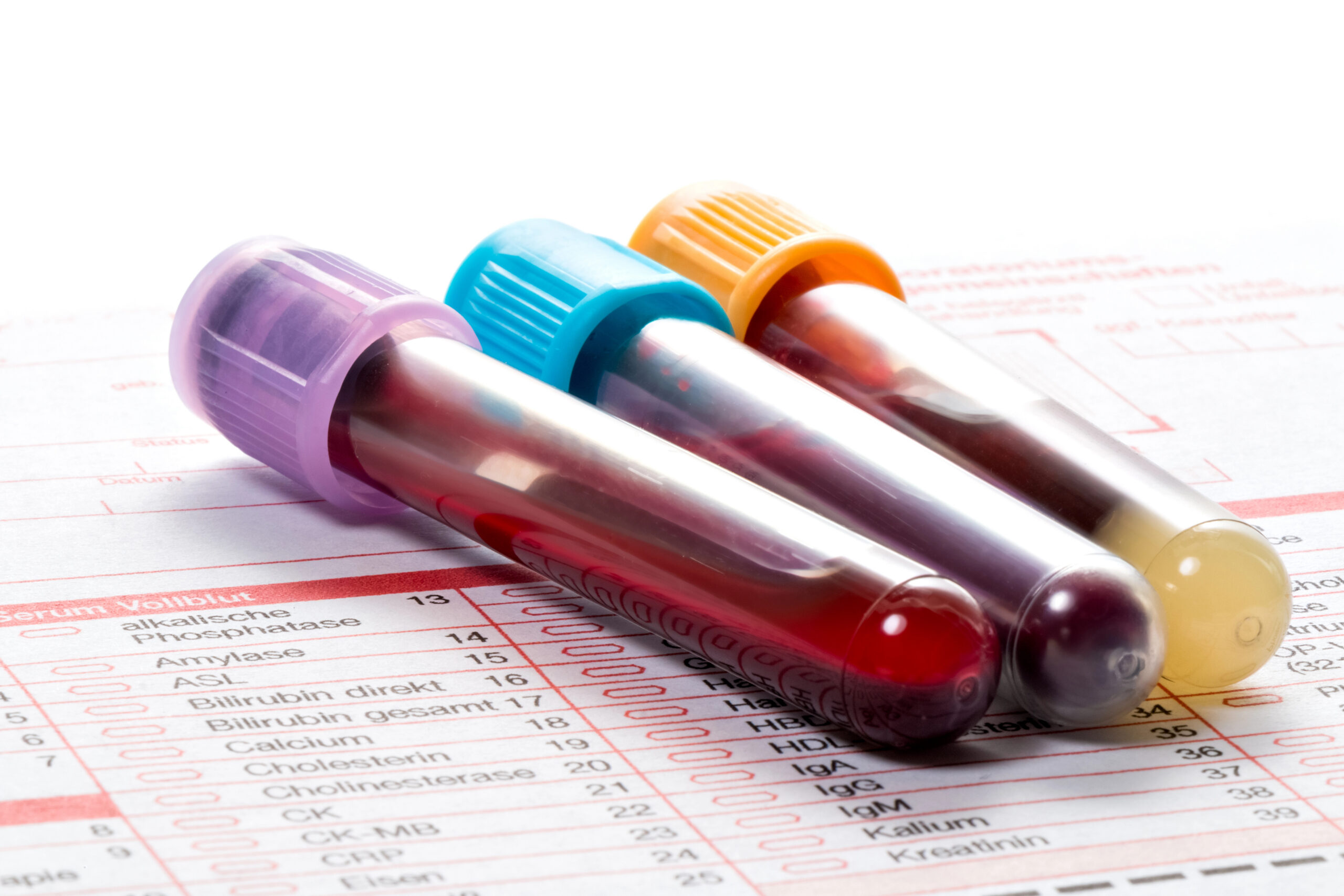
The panel is deliberately broad, because mental health symptoms rarely come from one system. Every marker below is included by design — and the full list is exactly the point:

A CBC with differential and a full anemia panel. Iron, B12, and folate status shape energy, cognition, and mood directly — and iron deficiency without anemia is a frequently missed driver of fatigue and low motivation.

A comprehensive metabolic panel (CMP), hemoglobin A1c (HgA1c), fasting insulin, leptin, uric acid, and a lipid panel. Together these read your blood sugar regulation, insulin sensitivity, and metabolic terrain — the glucose swings and insulin resistance that destabilize mood and energy long before they become diabetes.

A full thyroid panel — not just TSH, but the free hormones, reverse T3, and thyroid antibodies. A thyroid that looks "fine" on a single TSH can be functionally underperforming or quietly autoimmune, and the mental health consequences of that are substantial.

High-sensitivity C-reactive protein (hs-CRP) and an antinuclear antibody (ANA) screen. hs-CRP captures the low-grade systemic inflammation that conventional CRP misses; ANA flags autoimmune activity worth investigating further.

Cortisol, DHEA-S, and vitamin D (25-OH). A first read on the stress axis and on the vitamin D status that influences mood, immune regulation, and inflammation.

RBC magnesium, zinc, copper, lithium, and homocysteine. Red-cell magnesium reflects cellular magnesium better than serum; the zinc-to-copper relationship matters for neurotransmitter balance; homocysteine is a window into methylation and B-vitamin sufficiency.
Free 15-minute consultation to discuss your situation, answer your questions, and determine if we’re a good fit.
Each of these systems has a documented line to mental health, and the evidence is strongest exactly where standard panels are thinnest. Low vitamin D is associated with depression across observational and cohort studies [1]. Lower peripheral zinc concentrations track with depression, and more severe depression tends to track with greater relative zinc deficiency [2]. Systemic inflammation shows the same pattern — elevated C-reactive protein and interleukin-6 are consistently higher in people with major depression than in controls [3]. None of these are exotic findings. They’re ordinary biology that a routine visit simply doesn’t measure or doesn’t read closely enough.
This is the layer where the investigation starts. A sluggish thyroid, an inflammatory signal, a blood-sugar pattern, a mineral gap — any one of these can sustain symptoms that no antidepressant, mood stabilizer, or stimulant will fully resolve on its own, because the medication isn’t addressing what’s actually driving them.
Your results anchor the whole picture and tell us where to look first. An underperforming or autoimmune thyroid becomes a coordinated conversation with your prescribing provider. Elevated hs-CRP tells us inflammation is in play and points us upstream to find its source. Blood sugar and insulin patterns shape dietary and metabolic strategy. Low RBC magnesium or a skewed zinc-copper ratio directs targeted repletion. A flat or elevated cortisol reading tells us the stress axis needs attention and where hormone testing should go deeper.
The functional blood panel is one of seven tests in our standard mental health bundle. It works alongside gut microbiome assessment, advanced nutrient analysis, DUTCH hormone testing, food sensitivity testing, environmental toxicant screening, and genetic analysis to give the complete biological picture.
And because these serum values show what’s circulating rather than what’s active inside your cells, this panel is read alongside advanced nutrient analysis via NutrEval, which reaches the functional and cellular level blood alone can’t — the two are designed to complement, not duplicate each other.
If you’ve had recent bloodwork, bring it. We review what already exists before ordering anything — sometimes the most useful diagnostic move is re-reading labs you already have through a functional lens and asking what everyone missed. That said, most standard panels omit the majority of the markers above, so the comprehensive panel usually still earns its place in the bundle.

This panel is foundational for nearly everyone in the program, but it's especially valuable for:
A note on what bloodwork can and can’t tell us. Serum and plasma levels reflect what’s circulating in your blood, which is not the same as what’s happening inside your cells or tissues. A “normal” serum magnesium, for instance, can sit alongside genuine cellular depletion. That gap between circulating and functional status is exactly why advanced nutrient analysis sits alongside this panel — it reads nutrient status at the cellular and functional level, where blood alone can’t reach. We read the blood panel for what it does best, and we don’t over-read it beyond that. Full structure:
Free 15-minute consultation to discuss your situation, answer your questions, and determine if we’re a good fit.